

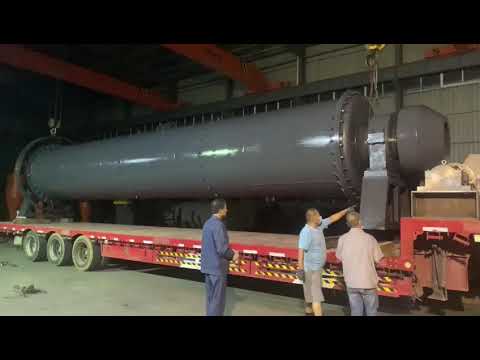
Duftmölunarvélball mill for mining &fine powder making
silica/Barite/limestone powder plant




Upplýsingar um vélina
- Heiti vélar:
- Duftmölunarvél
- Framleiðandi:
- ball mill for mining &fine powder making
- Framleiðsluár:
- 2026
- Ástand:
- nýtt
Verð og staðsetning
- Staðsetning:
- Dahuangye Industrial zone, XinXing East RD, Gongyi, 451200 Zhengzhou, China
Tæknilegar upplýsingar
- Afl:
- 300 kW (407,89 hP)
Tilboðsupplýsingar
- Auglýsingarauðkenni:
- A14521348
- Uppfærsla:
- síðast þann 08.03.2026
Lýsing
A ball mill is a fundamental grinding device widely used in mining, metallurgy, cement, and chemical industries. It is designed to grind ores and other materials into fine powder through impact and attrition between steel balls and the material inside a rotating cylindrical shell. In mining plants, ball mills are essential for ore beneficiation, while in powder-making industries, they ensure uniform particle size and high surface area for further processing.
Working Principle
The ball mill operates on the principle of impact and friction. As the cylindrical shell rotates around its horizontal axis, the grinding media—usually steel or ceramic balls—are lifted along the inner wall by centrifugal force and friction. When they reach a certain height, they fall freely, striking and grinding the material below. This repeated motion breaks down the material into fine particles. The process can be carried out in dry or wet conditions depending on the application.
Structural Composition
A standard ball mill consists of several main components:
Feeding part: Ensures uniform material input through a feeder or screw conveyor.
Discharging part: Can be grate type or overflow type, depending on the discharge method.
Rotating part: The cylindrical shell made of steel plates, lined with wear-resistant liners.
Transmission system: Includes motor, reducer, small transmission gear, and electrical control.
Grinding media: Steel or ceramic balls of various diameters for efficient grinding.
The internal liner design and ball size distribution are optimized to achieve maximum grinding efficiency and minimal energy consumption.
Technical Details/Typical Specifications:
Feeding size: ≤25 mm
Discharge size: 0.074–0.4 mm
Capacity: 0.65–615 t/h (depending on model and material hardness)
Cylinder speed: 18–38 r/min
Power: 18.5–4500 kW
Liner material: High manganese steel, rubber, or alloy steel
Grinding media load: 30–45% of cylinder volume
Operating Modes:
Dry grinding: Used for materials that must remain moisture-free, such as cement clinker, limestone, and quartz.
Gedpfxoq Ngafo Acpoka
Wet grinding: Common in ore beneficiation, where water or slurry improves grinding efficiency and particle uniformity.
Application in Mining and Powder Production
In mining operations, ball mills are used after crushing to further reduce ore size and liberate valuable minerals. They are integrated into grinding circuits with classifiers, hydrocyclones, and flotation systems. The ground material is classified by size, and oversized particles are returned to the mill for regrinding. This closed-circuit system ensures consistent product fineness and efficient energy use.
In fine powder production, ball mills are used to produce materials such as silicate, ceramic powder, refractory materials, and chemical raw materials. The uniform particle size achieved by ball milling enhances product quality and performance in downstream applications.
Conclusion
A ball mill is an indispensable piece of equipment for both mining and fine powder making. Its ability to grind materials into fine, uniform particles makes it vital for ore beneficiation and industrial powder production. With flexible configurations, high efficiency, and reliable operation, modern ball mills provide a cost-effective and energy-efficient solution for large-scale grinding, ensuring consistent quality and productivity across diverse applications.
Bjóðandi
Skráð frá: 2024
50 Auglýsingar á netinu

Senda fyrirspurn
Sími & Fax


 Dortmund
 SCHMETZ


 Alkmaar


 Guipúzcoa
 ELTERMA / IPSENVDFC-413


 Madrid
 Azemag

 Dortmund
 VEI-EngineeringVEI_KO_V_GB_400-350
 Soerendonk
 Takraf / ZemafZWB 630 x 800 - 1


 Gdańsk
 Taiwan Pulp MoldingTPM-1500


 Zheng Zhou Shi
 Rod ball mill / Rod Grinding MillFor Sand and mining beneficiation plant


 Seva
Seva CENTRIFUGESCA-700


 Schorfheide
 Sonstige/OtherFrumecar Modulmix 2000

Machineseeker-traustmerki
Hvað er traustvottorð?
Machineseeker vottar valda söluaðila með traustsvottun Machineseeker. Áður en úthlutað er framkvæma reyndir starfsmenn Machineseeker staðlaða og yfirgripsmikla skoðun.
Hvað skoðum við?

Staðfesting á
rekstrarleyfi eða útdrætti úr firmaskrá
Yfirferð á
póstfangi seljanda
Staðfesting á
bankatengingu
Staðfesting á
símalegu
aðgengi að aðalnúmerinu
Efnahagsupplýsingar
mega ekki innihalda neikvæða eiginleika
Kaupendur kvartanir
geta leitt til þess að vottunin verði afturkölluðHvað þýðir þetta fyrir þig sem kaupanda?
Með Machineseeker-traustmerkinu getur þú sem kaupandi þekkt áreiðanlega seljendur, jafnvel án eigin athugunar, sem líklega stunda heiðarlega og réttláta viðskiptahætti.
Auðvitað geta samt sem áður orðið ágreiningar á meðan á kaupferlinu stendur. Machineseeker ber ekki ábyrgð á brotum á lögum sem virkir kaupendur eða seljendur á Machineseeker kunna að fremja.